
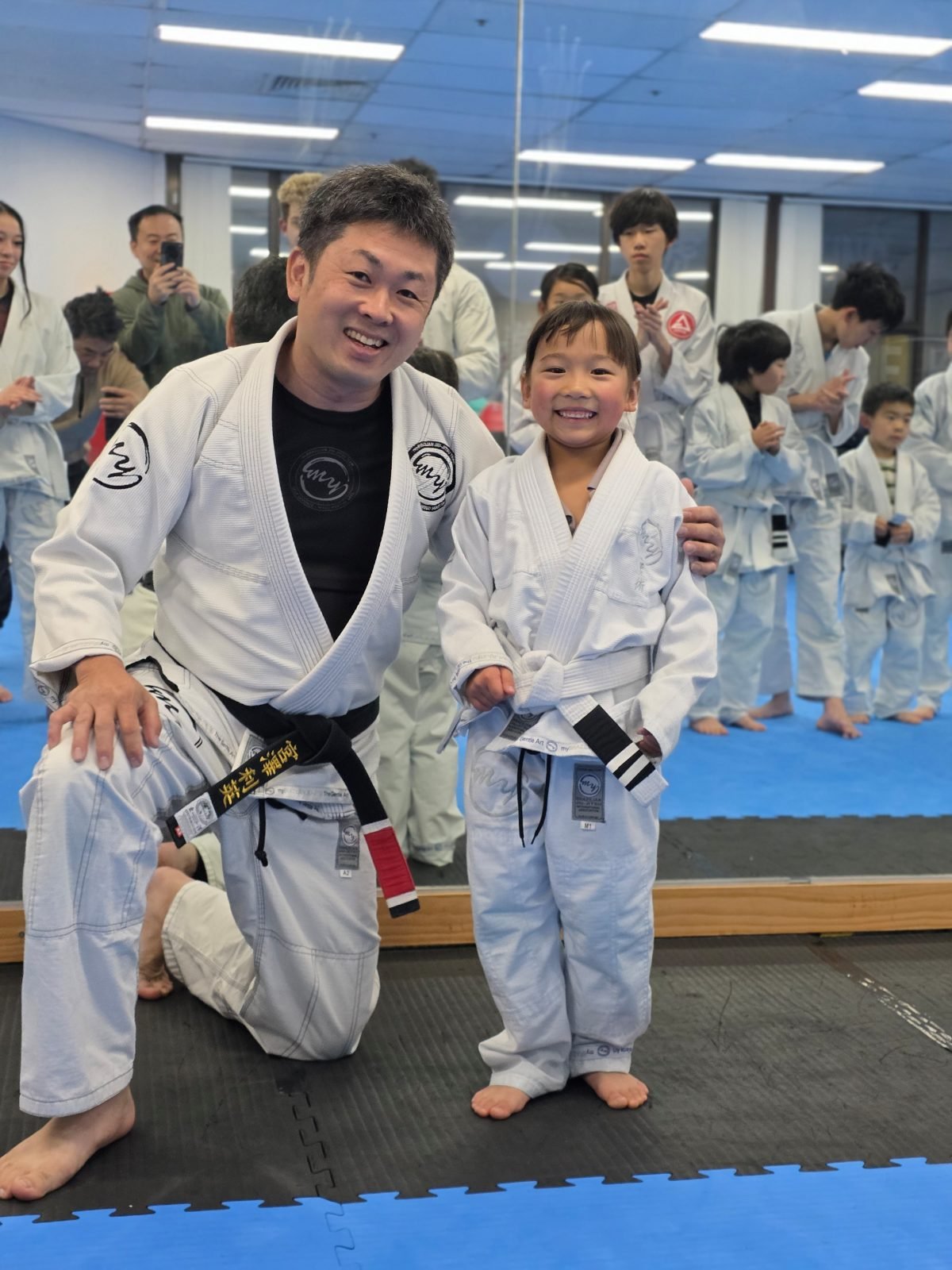
Within a few kilometres of Carlingford you can find karate, taekwondo, kung fu, judo, boxing and jiu-jitsu, and every one of them will tell you it builds discipline and confidence. That's true of all of them, which makes it useless for choosing.
Here's what actually separates a good children's program from a mediocre one, whatever the style on the sign.
1. How are children grouped, and who will my child train with?
A five-year-old and a twelve-year-old need different things — different attention spans, different bodies, different rules about contact. Some gyms split into age brackets; others run mixed classes and pair children by size and experience. Either can work. What matters is that someone has thought about it and can tell you exactly how it's handled.
Ask: who will my child be paired with, and how do you handle a big size or age gap?
2. What's the coach-to-child ratio?
You want a number, not an adjective. "Small classes" means nothing. Thirty children to one coach is crowd control; a dozen is teaching.
3. Do all coaches hold a current Working With Children Check?
In NSW this is a legal requirement for anyone in child-related work, and a gym should be able to answer it instantly and without defensiveness. Hesitation is your answer.
4. Can you watch the whole class?
Any program that discourages parents from watching has something it would rather you didn't see. Good gyms have chairs. Sit in one for a full session before you enrol — you'll learn more in forty minutes of watching than from any amount of website reading.
5. What does the coach do when a child is upset?
This is the one to watch for. Somebody will cry, get frustrated, or refuse to join in — it happens in every children's class ever run. Watch what the coach does. Do they crouch down to the child's level, or shout across the mat? Do they let the child sit out with dignity, or make an example of them?
How a coach handles the worst two minutes of a class tells you more than the other thirty-eight.
6. Is there striking?
This is a genuine fork in the road, and there's no universally right answer. Jiu-jitsu has no punching or kicking — it's grappling, so children learn control, leverage and how to stay calm underneath someone. Some parents specifically want that. Others want a striking art. Decide which before you start touring gyms.
7. How is bullying actually taught?
Every martial arts school claims to be anti-bullying. Ask what that looks like in a lesson. The good answer is specific: use your voice first, walk away, tell an adult, and only use physical skills to control someone safely if there's no other option. The weak answer is "the confidence takes care of it".
8. What's the trial, and what's the contract?
A free trial class is standard and you shouldn't pay to try. Be more careful about what comes after: 12-month lock-in agreements are common in martial arts, and children change their minds. Ask about the minimum term, the notice period, and whether you can freeze if your child breaks an arm falling off a scooter.
9. Does your child want to go back?
In the end this outranks the other eight. A program your child is excited about on a Tuesday afternoon will do more for their confidence than a technically superior one they have to be talked into. Try two or three, and let them pick.
Our kids and youth program in Carlingford is built around exactly these points, and the first class is free — you're welcome to sit and watch the whole thing. See the kids program or the current schedule, or call 0422 167 115 and ask which class suits your child's age.