Menu
Call 0422 167 115

Affiliation & lineage

Part of something bigger.

myBJJ Miyazawa is part of the myBJJ Team, and that connection stands behind every belt awarded on this mat.

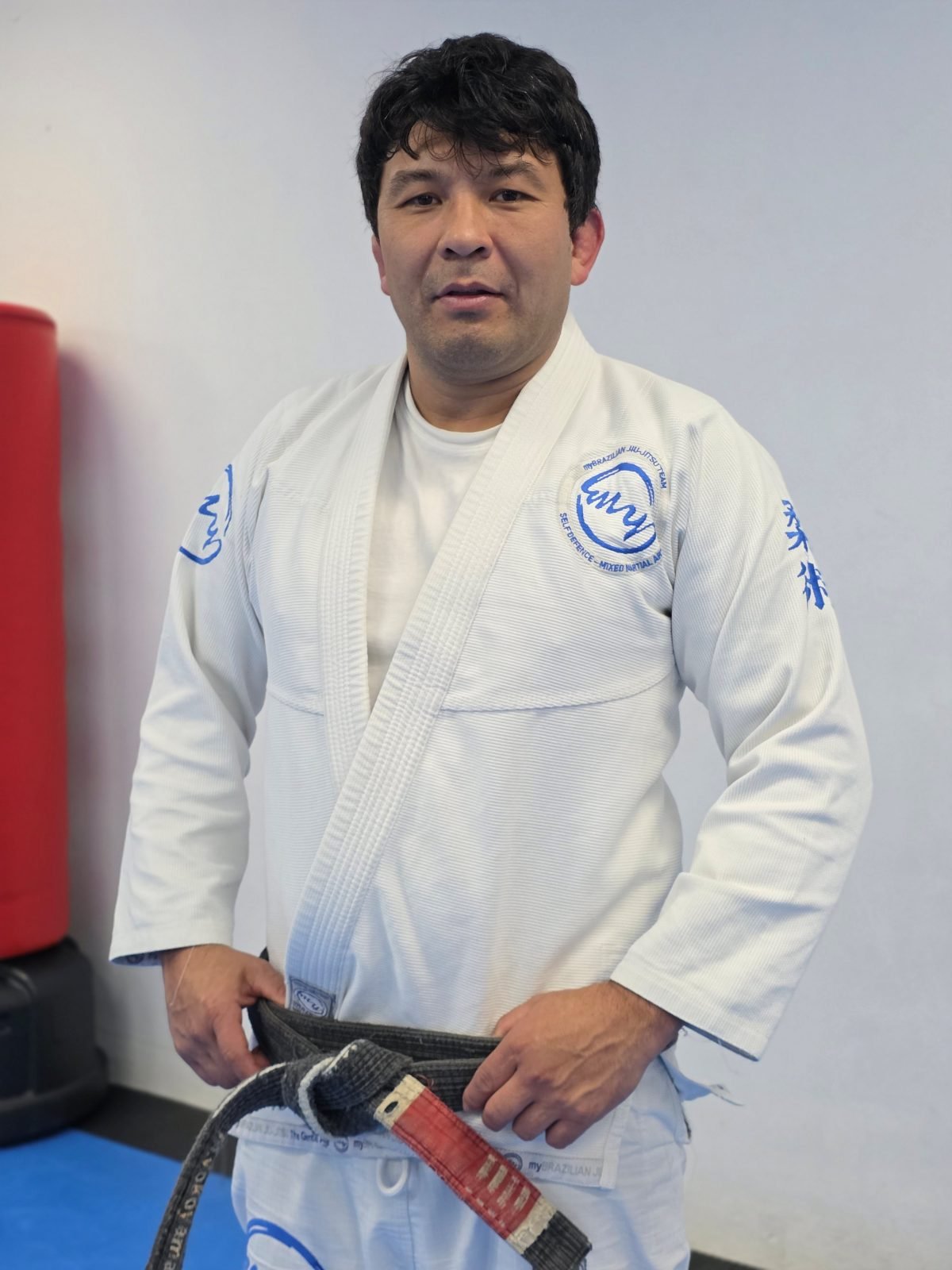
Professor Mario Sergio Yokoyama in his gi and black belt

Founder

Professor Mario Sergio Yokoyama

5th-degree black belt Founder, myBJJ Team

The myBJJ Team was founded and is led by Professor Mario Sergio Yokoyama, a fifth-degree Brazilian Jiu-Jitsu black belt. A fifth degree is not a certificate you sit for — in this sport, degrees on a black belt are awarded over decades of teaching and continuous involvement, which makes them a reasonable proxy for how long somebody has been doing this seriously.

Toshi has trained under Professor Yokoyama since 2008. The syllabus taught at Carlingford, the standards applied at grading, and the belts on the wall all come from that line.

Professor Yokoyama received his Brazilian Jiu-Jitsu black belt from the late Ryan Gracie on 27 April 2006 — placing this academy directly in the Gracie line. He founded myBJJ from his own backyard in 2007.
Where it comes from

An unbroken line.

Brazilian Jiu-Jitsu has a traceable history, and a belt is only as meaningful as the line behind it. This is ours.

  1. Jigoro KanoFounder of Judo
  2. Mitsuyo MaedaKano's student. Arrived in Brazil, 1914
  3. Carlos GracieLearned from Maeda; adapted the art with his brothers
  4. The Gracie familyHélio's leverage-based approach becomes Brazilian Jiu-Jitsu
  5. Ryan GracieGrandson of Carlos Gracie
  6. Prof. Mario Sergio YokoyamaBlack belt awarded 27 April 2006. Founded myBJJ, 2007
  7. Toshihide MiyazawaUnder Prof. Yokoyama since 2008. Your instructor

How the art was built

Maeda was one of Judo's great travelling experts. In Brazil he taught Gastão Gracie, who passed it to his son Carlos. Carlos and his brothers refined what worked and discarded what didn't.

The youngest, Hélio, was too frail to train Judo as it was taught — so he rebuilt it around leverage rather than strength. That decision is why a smaller person can control a larger one.

From a backyard to five countries

myBJJ started in Professor Yokoyama's backyard in 2007. It is now headquartered in Sydney with affiliated academies in Japan, New Zealand, Korea and Brazil.

Team competitors have taken titles at World, Pan American, Pan Pacific, Australian and Brazilian championships, and the association runs instructor training and curriculum development behind all of it.

Why affiliation matters

What being part of the team gives you.

Plenty of good gyms are independent. But an affiliation answers a question that a standalone academy can't: who else says this rank is real?

01

Recognised rank

A belt earned here is a myBJJ Team belt, awarded within a recognised lineage. If you move interstate or overseas and walk into a new academy, your rank travels with you and means something to the person at the desk. A belt from a gym with no line behind it can be a much harder conversation.

02

A wider network

You're not limited to one room. Team academies share mats, and members are welcome to train at partner locations — which is exactly how the free access to INRG myBJJ Seven Hills works. Travelling for work becomes an excuse to train somewhere new rather than a fortnight off.

03

Seminars & camps

Team-wide seminars and training camps bring higher belts and visiting instructors through, which is how a small academy gets exposure to material and body types it wouldn't otherwise see.

Team seminars run monthly.

04

Shared culture

What keeps people training is the room, and the room is shaped by the standards it inherits. The team's expectations around respect, hygiene, safety and looking after training partners are the same in every affiliated academy — so a visitor from another myBJJ mat already knows how this one works.

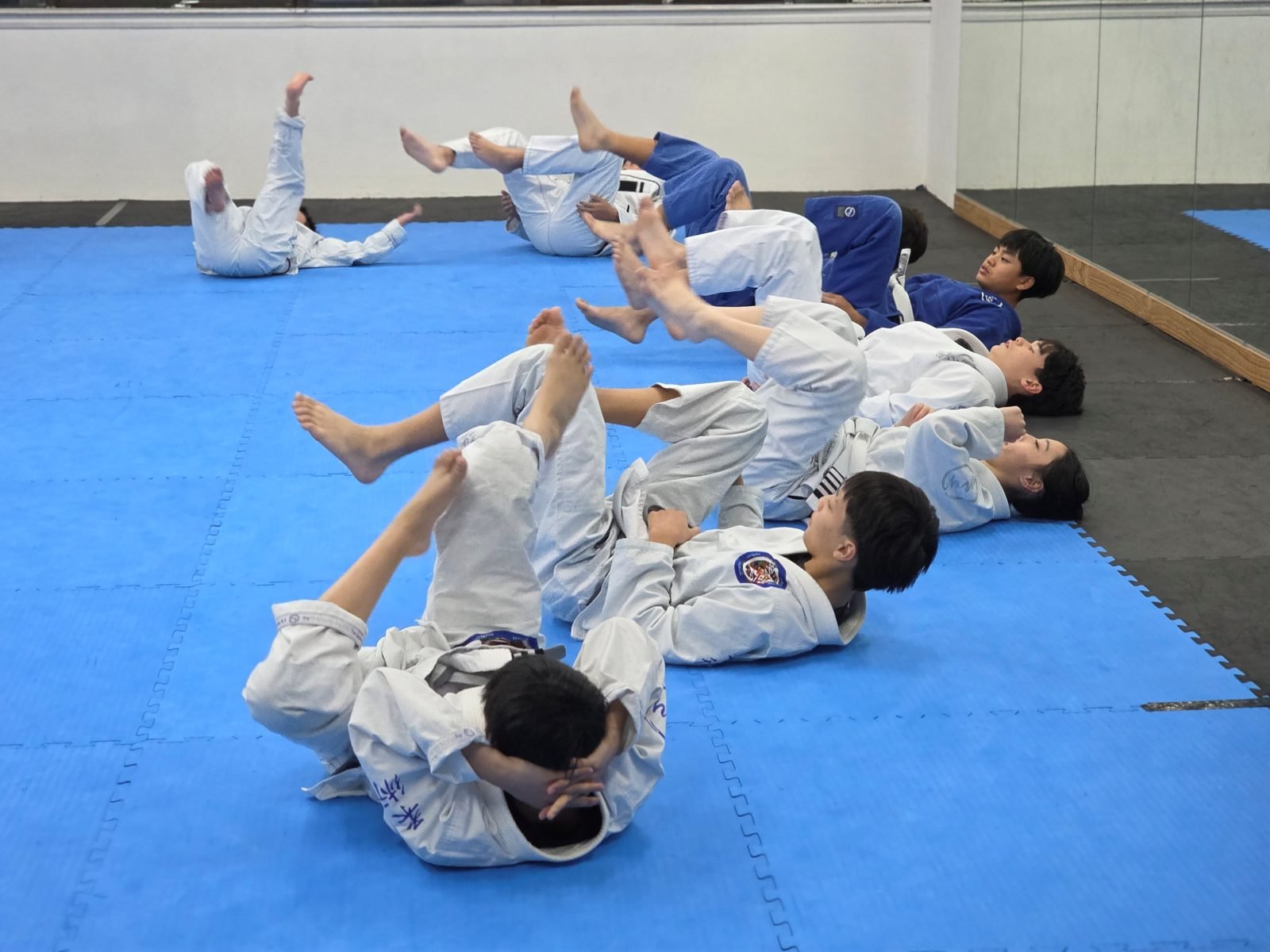
A student working from guard during a training round

Sanbai Doryoku

Three Times the Effort

Masahiko Kimura — the judoka whose name is still attached to the shoulder lock every jiu-jitsu student learns — is remembered for a training principle as much as for any single match: sanbai doryoku, three times the effort. Where others trained three hours, the account goes, he trained nine.

Taken literally that's a recipe for injury, and nobody here is asking you to train nine hours a day. Taken properly, it means something more useful: the person who improves fastest is almost never the most talented one in the room. It's the one who shows up when it's raining, drills the boring escape a hundred more times, and asks the question they're slightly embarrassed to ask.

That's the ethos behind the team. Consistency beats intensity, and both beat talent.

Meet your instructor

Toshi's full profile, credentials and how ranks progress here.

The academy itself

What the room is like, both venues, and what we're trying to build.

Who we work with

The team, the governing bodies, and the gym we share a roof with.

Call 0422 167 115